Any Software That Can Zoom in and Change Pixcel of Frame
Follow the simple steps in this tutorial to resize whatever image in Photoshop without losing quality or resolution.
Preventing undesirable effects like stretching, cropping, and pixelation is within your grasp. But use this guide to take control of the size and resolution of your images.
As a bonus we've included a section virtually resizing without losing paradigm quality. Cheers to Photoshop, nosotros can enlarge images to a bespeak without the typical pixel enlargement artifacts that can make them look bad.
Resizing images can exercise more than than but prevent machine-sizing. Information technology's just manifestly handy to know. After all, the more you lot can do by yourself, the less reliance you have on others, which saves time and money. Plus it's really easy once you understand the terms and functions. So, permit's get to it.
Resize an Prototype in Photoshop
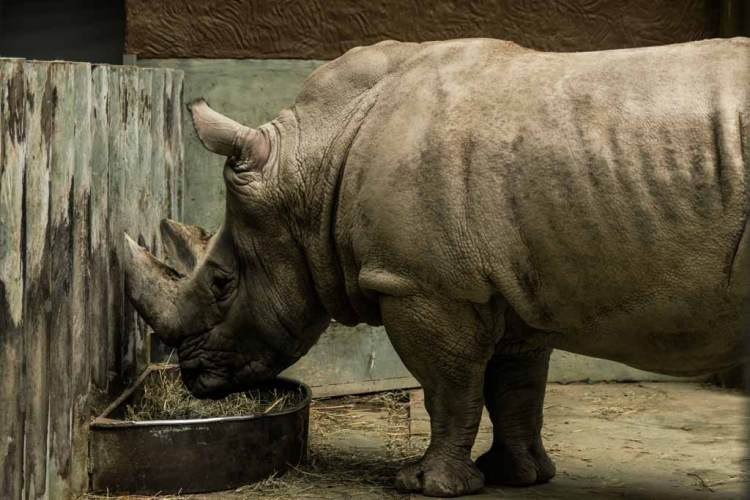
We desire to resize this high resolution image of a rhinoceros. As yous tin come across, in that location's a lot of detail we don't desire to lose, and then here are the proper steps for maintaining them.
1. Open up Image Size
Your resizing options live in the Paradigm Size window. To admission the window, open your epitome file. And then click on Image at the pinnacle of the application frame, and click Paradigm Size. Or, hold Command + Option and hit I on the keyboard.
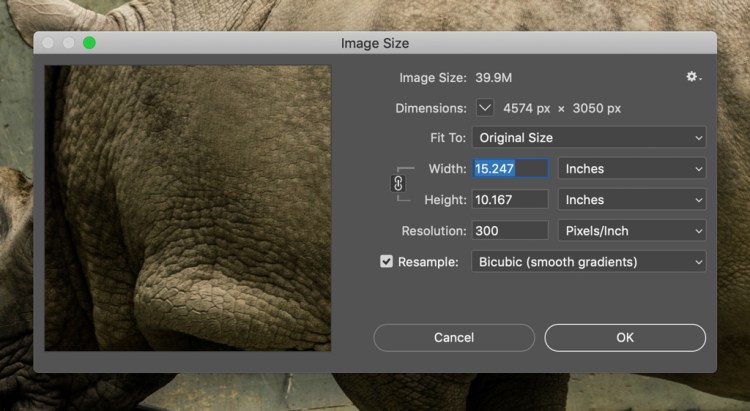
From here you'll come across a number of options, fields, and drop down menus giving y'all control over the dimensions and resolution of the image.
In this guide, we only need to address the Width and Peak fields. As long as you lot leave the link icon in its On state, yous won't have to worry almost distorting your epitome by accidentally mis-typing or mismatching values. They'll automatically sync with each other. I.eastward., when you lot change ane value, the other changes to match the original ratio of dimensions.
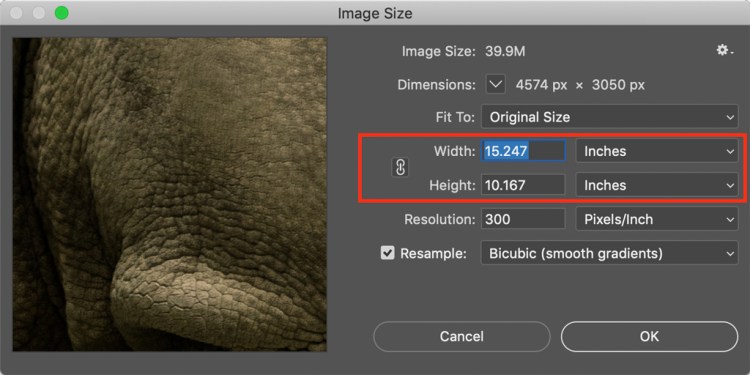
2. Set Your Dimensions
Input your specific dimensions. In the drop-down menus to the right of each dimension field, you have choices for the units of dimension:
- Percent – allows for quick math in percentages
- Pixels – prepare specific pixel dimensions
- Inches – sets PPI (Pixels per Inch)
- Other units of linear measurement
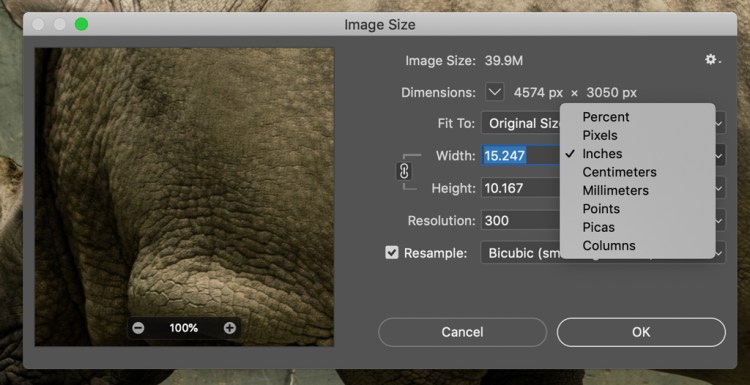
Simply choose which unit of measurement fits your goal. It's good practice to utilise an epitome pre-sized for use in its intended environment, to prevent other apps or services from changing your images without your control. This means to brand the prototype exactly the size you need so you lot can place it at 100%.
For case, in a printed slice you would want to size the image to the dimensions of the epitome box in your layout program to requite the best resolution. For a digital design, you lot would instead brand sure the pixel dimensions friction match the requirements.
3. Relieve a Re-create
In one case you lot accept your dimensions ready, hit OK. At present you'll be back in the prototype window where you lot can do other editing work, or just relieve and close. It's good do to save a copy of this image and leave the original as it was, in case y'all need to make changes.
Hit Command + Shift + S to bring up the Salve Every bit dialog, as well bachelor under the File carte up top. Here y'all tin rename your newly resized file to differentiate it from the original, and as well save it to a new location. If yous have a batch of images to resize, it's a good thought to create a new folder for the new images to play information technology safe.
Overstate an Epitome in Photoshop
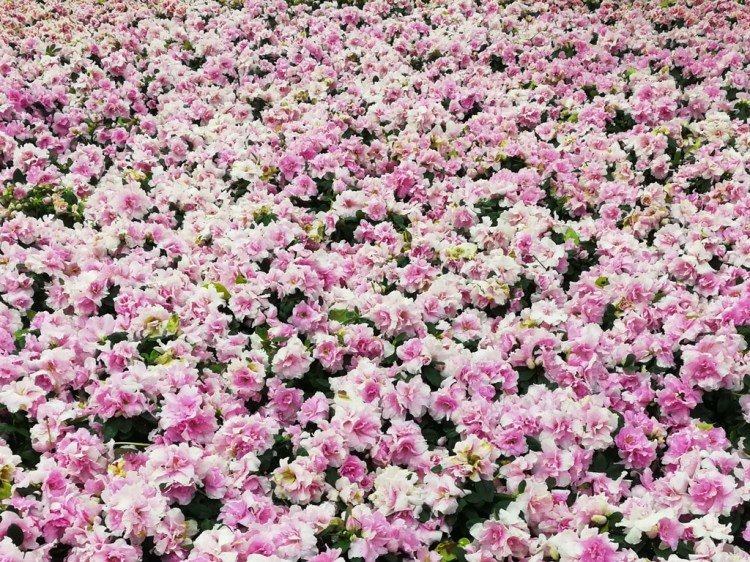
Since a digital prototype is made of pixels, i.e. hard-edged footling monotone squares, we tin't divide them once you zoom in close plenty to see them individually. We'll rely on Photoshop's loftier-level applied science to resample the prototype.
This is where Resolution is important. This is the indication of an image's detail, measured in how many pixels fit within a square inch, or PPI (Pixels Per Inch). Yous tin can see how different resolutions looks below. More pixels per square inch of an image give more particular and sharpness.
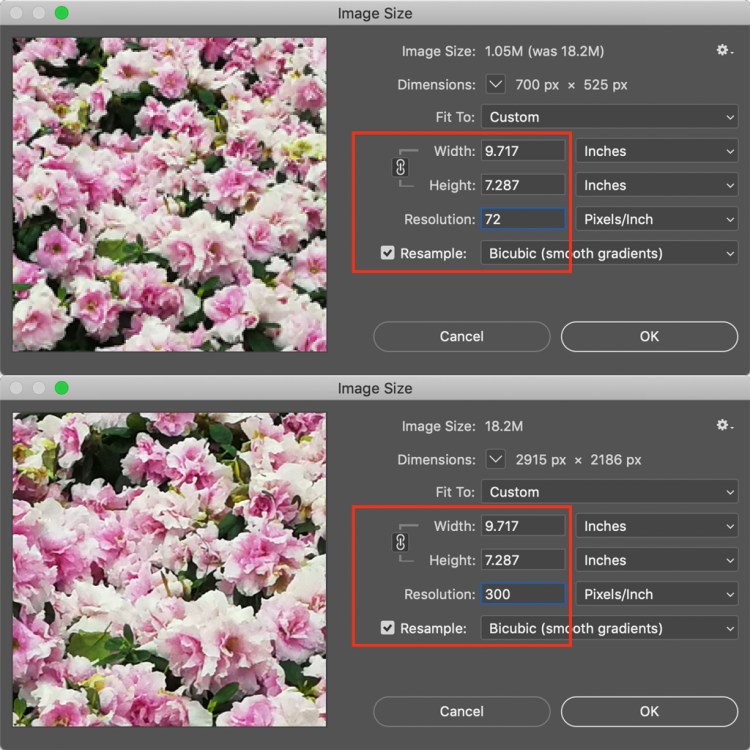
This brings us to increasing the size and resolution of images, and the limitations of enlargement. Remember, pixels can't be divided. So how do nosotros overstate an prototype if we tin can't create pixels from pixels?
one. Enable Preserve Details 2.0
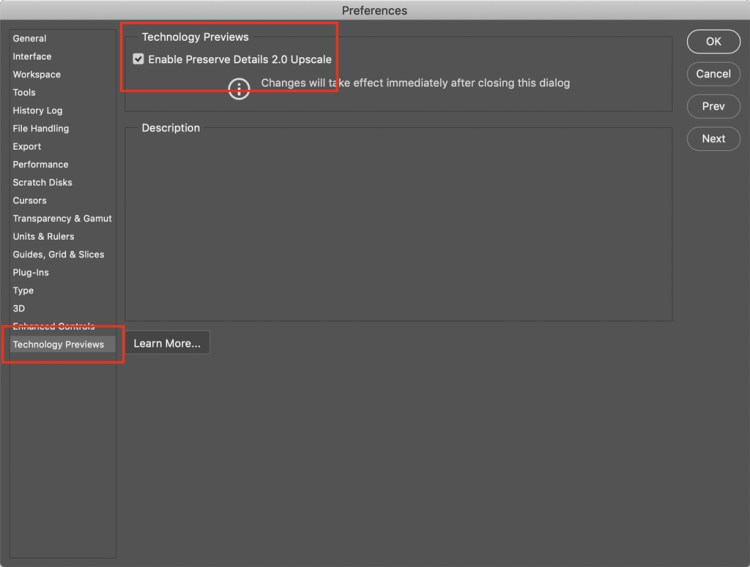
Photoshop introduced this high-quality enlargement feature in 2018. To enable information technology, hit Control + One thousand to open up the Preferences windows, so click Applied science Previews in the listing to the left of the window.
You tin can also click Photoshop at the height of the screen, hover over Preferences, and click Technology Previews.
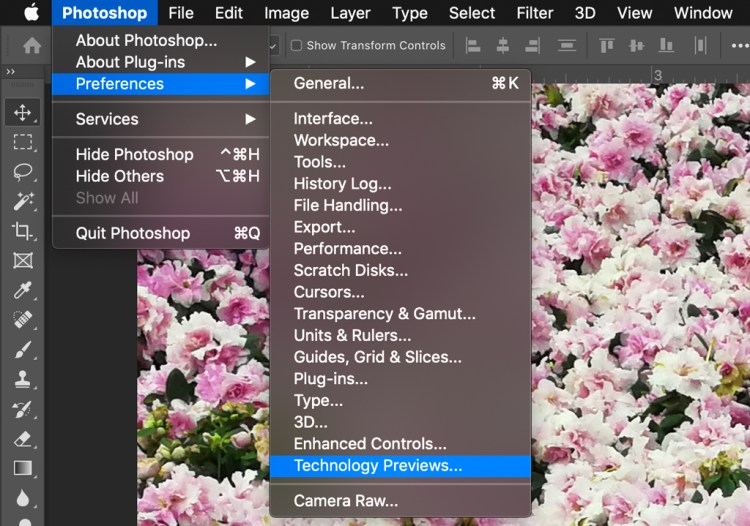
Just make sure Enable Preserve Details two.0 Upscale is checked on and you lot're adept to go. If not, click information technology on. No need to restart. Now go dorsum to the Epitome Size window and refer to the Resample toggle.
2. Enable Resample
When switched off, the pixel dimensions and resolution remain linked. If you increase the resolution (seen equally Pixels/Inch in the window) the dimensions will subtract to reverberate the change, and vise versa. It merely means that Photoshop is non adding or removing pixels, the full number of pixels remains constant and only the corporeality per square inch changes.
Now check Resample on, and the options for the resampling method in the drop down next to it become available. These are the options for changing resolution and dimensions separately, letting Photoshop blend the pixels in various ways to keep the image smooth when enlarging or reducing. The options for enlargement are in the top one-half of the listing.

3. Select Preserve Details 2.0
The default manner for enlargement is Automatic, simply it could exist prepare to the concluding method used. If it's set to Automatic, Photoshop won't use Preserve Details ii.0, so choose this manually to ensure you go the loftier quality results it provides. So select Preserve Details two.0 for best results.
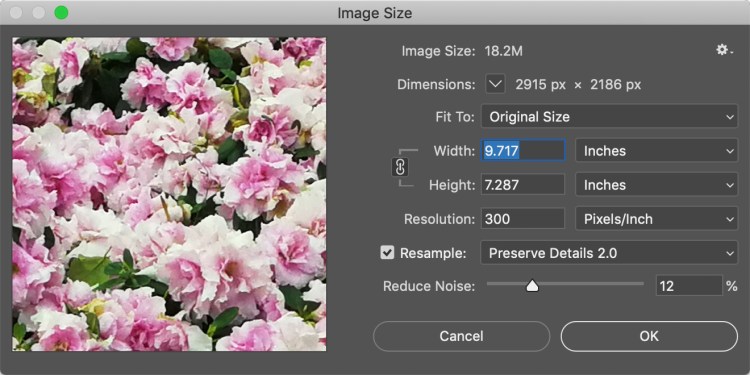
4. Dissonance Reduction
When you select Preserve Details ii.0 from the listing, you'll come across a slider for Noise Reduction percentage. Instinctually it would seem similar throwing the slider all the mode to 100% would work, but use the preview in the left side of the window to encounter how that affects the paradigm. Sometimes it can smear the image details if set up too high. Choose a value that reduces noise, but doesn't make the details too "creamy."
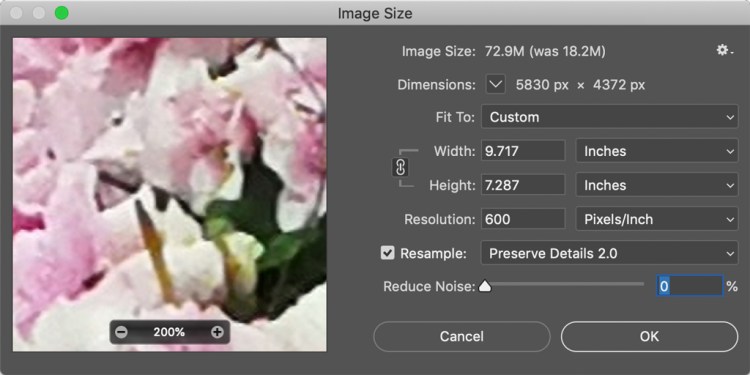
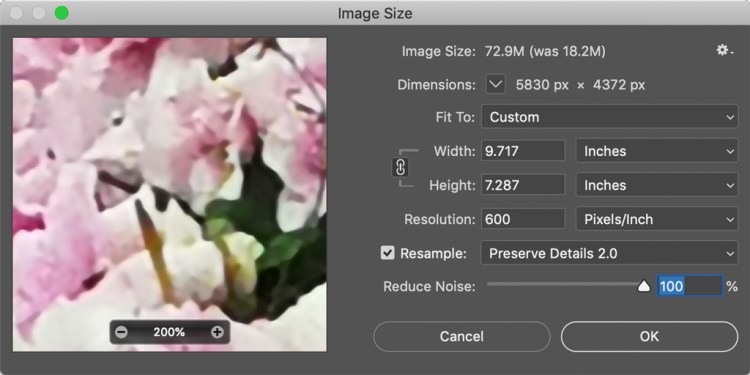
Now, do a final cheque of the image preview by zooming in and out and panning around the image. Change Dissonance Reduction if you need to. Striking OK and bank check the image over again at full screen. If y'all want to compare, hitting Undo (Command + Z) and open Paradigm Size once again. Use other methods of enlargement from the drop down bill of fare and check the results. Chances are Preserve Details ii.0 will be your all-time all-time for loftier quality enlargement, without losing image quality.

Looking for other useful Photoshop tips? Check these out.
- Halftoning 101: How to Halftone Images in Photoshop
- How to Smooth Edges in Photoshop After Making a Selection
- How to Whiten Teeth in Photoshop + More Retouching Tips
- Photoshop Basics: Learn How to Use Layers in Your Designs
- How to Brand a Background Transparent in Photoshop
Source: https://www.shutterstock.com/blog/photoshop-resize-image-without-losing-quality
0 Response to "Any Software That Can Zoom in and Change Pixcel of Frame"
Post a Comment